Full – time Employees: Labor Contracts The contract must be written in Arabic and can also be in a bilingual form. It must be a written contract and signed by both parties with wet ink. The contract content should be comprehensive and clear, including at least basic information such as name, start date, employment duration, job description, and termination conditions. Ensure that all employment agreements, their revised versions, and termination notices are signed with wet ink. According to the requirements of labor contract management, the contract terms should be further refined to clarify the work content and job responsibilities, salary structure and payment method, working hours and leave system, probationary period terms, contract termination and compensation mechanism, as well as the rights and obligations of employees. At the same time, the requirements for retaining relevant documents have been strengthened. All labor contracts, evaluation documents, and warning records must be kept for at least five years for review.
Salary Payment Salaries are usually paid monthly (they can also be paid weekly or daily). They must be paid by bank transfer or in cash and no later than the first week of the next month.
Monthly Minimum Wage The minimum wage for employees in the private sector is 7,000 Egyptian pounds per month.
Probationary Period The probationary period shall not exceed three months (strictly limited). The labor law clearly stipulates that the maximum probationary period is 3 months and cannot be extended or used in segments. Enterprises must complete multi – dimensional evaluations of employees’ job adaptability, work ability, and discipline records during the probationary period.
Employer Costs Employer costs are generally estimated to be 18.75% of the employee’s salary. Social Security – 18.75% Unemployment Rate – 1.0% Emergency Fund Donation – 25.40 Egyptian pounds The costs of some employers are limited, so the percentages may vary. One – time fee: Mandatory wet – ink employment agreement processing fee – $80 Note: Social security contributions are calculated based on a minimum monthly salary of 2,300 Egyptian pounds and a maximum monthly salary of 14,500 Egyptian pounds in 2025. As of January 1st each year until 2027, the monthly salary limit will increase by 15%. Social Security (NOSI) and Tax Obligations: Employers must register employees in the NOSi social insurance system in a timely manner after they start work, declare and pay taxes and social insurance according to the legal proportion. Late or incorrect declarations may result in fines and government audit risks.
3. Salary Payment and Statutory Holiday Responsibilities
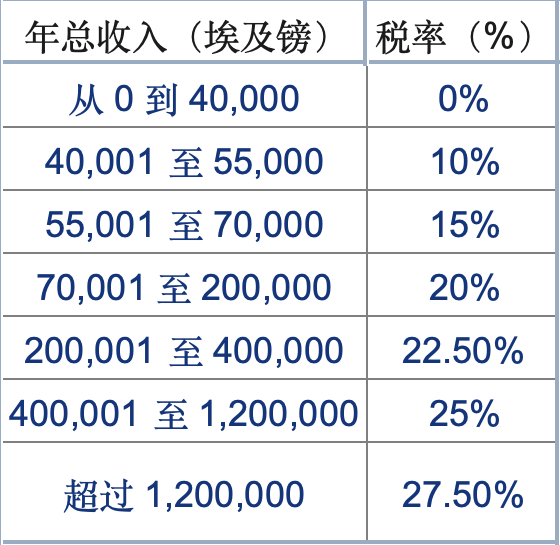
Personal Income Tax The personal income tax rate ranges from 0% to 25%, and the income tax is calculated on a progressive basis.
Overtime Pay and Maximum Working Hours The standard working hours are 8 hours per day and 40 hours per week. The standard working week is from Sunday to Thursday. The overtime pay policy is as follows: Normal weekday overtime: 135% of the salary Night – time overtime (after 10 p.m.): 170% of the salary Overtime on rest days: 200% of the salary Overtime on public holidays: 300% of the salary
Statutory Holidays Egypt celebrates 12 national holidays within 15 days. The Egyptian government usually announces changes to public holiday dates at the last minute. The usual practice is to move the holidays to Sunday or Thursday to create a long weekend. Orthodox Christmas; Revolution Day on January 25th; National Police Day; Sinai Liberation Day; Labor Day; Sham El – Nessim; Eid al – Fitr; Revolution on June 30th; Egyptian Uprising on June 30th; Eid al – Adha (3 days); Revolution Day; Islamic New Year; Armed Forces Day; Prophet’s Birthday.
Treatment or Conversion Logic of Unused Annual Leave at the End of the Year Unused annual leave of employees may be cancelled or paid in cash, depending on the employer’s policy and contract terms.
Statutory Holidays Full – time and part – time employees are entitled to 21 working days of paid time off (PTO) per year. PTO accumulates at 1.75 days per month. Employees are eligible for annual leave after continuous service for 1 year. In the first year of employment, the annual leave taken by employees shall not exceed the accumulated annual leave.
Other Leaves
Maternity Leave: Pregnant employees who have worked continuously for 10 months are entitled to 90 days of paid leave. During this period, employees will receive 100% of their salary, up to a maximum of 10,900 Egyptian pounds per month, and social security will be responsible for paying this salary.
Parental Leave: There is no legal provision for parental leave in Egypt. However, some employees may be entitled to maternity leave.
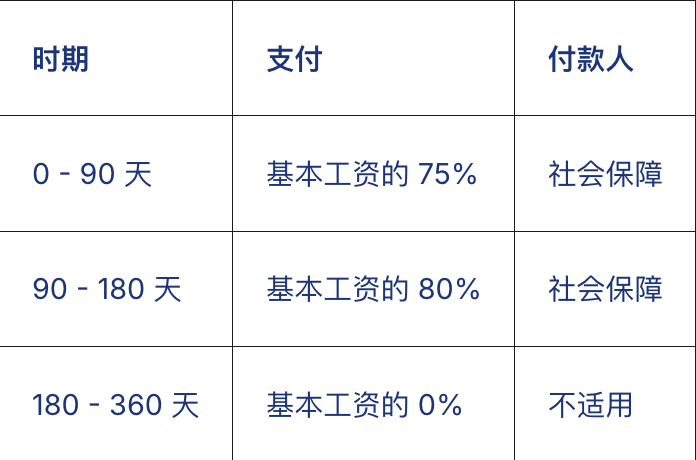
Sick Leave: Employees are entitled to up to 1 year of paid sick leave. The salary rate and payer of sick leave vary according to the length of the sick leave.
Calculation Logic of Incomplete Attendance Salary (Including Absence or Unpaid Leave) When an employee is absent from work or takes unpaid leave, the salary is calculated based on the daily wage and deducted accordingly. Some enterprises may use the hourly wage system to calculate the deduction. Image link: https://manshurat.org/node/14585?utm_source
Expatriate Employees Egyptian employees posted overseas should sign an expatriate contract. It is recommended to register it at the local Egyptian embassy or consulate for legal protection.
4. Dismissal Rules and Compensation Arrangements
Dismissal (Legal Requirements and Best Practices)
Termination of Labor Contracts (More Rigorous Process and Higher Evidence Requirements)
Legal dismissal reasons must have sufficient basis, including serious violation of rules and regulations, continuous or multiple absences from work, long – term non – compliance with performance requirements with written warnings, and causing significant damage to the enterprise.
The dismissal process must be in writing and traceable. Enterprises must establish the following document systems: performance review records, coaching and improvement plans, formal warning letters, dismissal decisions and approval documents, and termination notices. If the process is not compliant, it will be regarded as an illegal dismissal.
The legal consequences of illegal dismissal are more severe. The labor court may require the enterprise to reinstate the employment relationship, and the enterprise may need to pay back – pay and compensation. In serious cases, it may affect the enterprise’s compliance credit.
Legal Dismissal (Lay – offs/Company Restructuring) In case of lay – offs due to economic difficulties, bankruptcy, or business restructuring, employees must be notified in writing 3 months in advance, and approval from the Ministry of Manpower is required. For the first 5 years: One month’s salary is paid for each year of work. After 5 years: One and a half months’ salary is paid for each year of work.
Dismissal without Just Cause (Illegal Dismissal) If the employer unilaterally terminates the contract without a legal reason, they need to pay 2 months’ salary for each year of work, with a minimum of 6 months’ salary.
Dismissal during the Probationary Period If the employee is still in the probationary period (maximum 3 months), the employer can dismiss the employee without cause but must give written notice, and there is no compensation. The difficulty of dismissal significantly increases after the probationary period (key point). The updated law strengthens the restrictions on “arbitrary dismissal”: enterprises must provide sufficient written evidence chains, prove that they have provided employees with guidance, training, and reasonable improvement opportunities, and cannot use vague reasons or oral evaluations as the basis for dismissal. Note: After employees pass the probationary period, they are considered officially suitable, and the dismissal cost and procedural requirements will increase significantly.
Dismissal for Serious Misconduct (Immediate Dismissal) If an employee seriously violates company regulations, such as theft, fraud, deliberate damage, or continuous absence from work, the employer needs to provide written evidence to support the dismissal decision, and there is no compensation.
Non – renewal of Fixed – term Contracts upon Expiration When the contract expires and the employer decides not to renew it, the employee must be notified in writing 30 days in advance. There is no compensation, but the employer needs to pay the outstanding salary and the cash – in value of unused annual leave.
Voluntary Resignation of Employees If an employee voluntarily resigns, they need to notify the employer in writing 30 days in advance. There is no compensation, but the employer needs to pay the outstanding salary and the cash – in value of unused annual leave.
Conversion of Annual Leave for Departing Employees
If an employee still has unused annual leave upon departure, the employer needs to calculate and pay according to the daily wage multiplied by the number of unused annual leave days.
If an employee leaves during the probationary period, since the annual leave has not taken effect during the probationary period, it is not applicable for conversion and payment.
If an employee leaves due to lay – offs or dismissal, in addition to compensation, the unused annual leave needs to be converted and paid.
If an employee voluntarily resigns and meets the conditions for annual leave, the employer should pay the cash – in value of unused annual leave.
5. Analysis of Incentive Measures and Policies of Local Governments for Establishing Companies and Hiring Local Employees
Incentive Policies
Investment Incentives: According to the Investment Law, the government provides tax exemptions and tariff preferences for specific industries (such as manufacturing, technology, and agriculture). Enterprises established in special economic zones (such as the Suez Canal Economic Zone) can enjoy additional investment preferential policies.
Incentives for Hiring Local Employees: Enterprises that hire a certain proportion of Egyptian employees can receive social security subsidies or tax incentives. The government provides vocational training subsidies to help enterprises improve the skills of local employees.
Support for Small and Micro – enterprises: Small and medium – sized enterprises can obtain low – interest loans, tax – free periods, and technical support.
Support for Foreign – funded Enterprises: Foreign – funded enterprises are allowed to hold 100% equity (except for some strategic industries). A simplified company registration process and visa facilities are provided to attract foreign investors.
6. Human Resources Analysis and Employment Suggestions in Different Regions
Number of Employed People The total labor force in Egypt is about 30 million, with a relatively large proportion of young people. Manufacturing, agriculture, technology, and services are the main employment industries.
Unemployment Rate In recent years, the unemployment rate has remained between 7% and 10%. The government is creating more employment opportunities through economic reforms. There is a relative shortage of technical talents, and some industries have a high demand for labor.
Average Salary Trend Egypt’s minimum wage standard in 2025: Government departments: Approximately 7,000 Egyptian pounds per month Private sector: Approximately 7,000 Egyptian pounds per month (depending on the industry)
Employment Suggestions Enterprises should ensure compliance with Egyptian labor laws, especially in terms of contract signing and social security payment.
The employment cost and risk of enterprises are increasing. The increased difficulty of dismissal means that the project operation cost and compliance cost will increase simultaneously.
It is recommended that enterprises establish a standardized personnel management system: a complete probationary period evaluation process, a KPI/performance system, a standardized warning mechanism, a training and coaching record system, and digital management of employment files.
Foreign – owned enterprises and the EOR model need to pay special attention: Due to the more stringent legal environment for cross – border employment, non – compliant processes will face high compensation, labor arbitration, and risks to the enterprise’s reputation and compliance. References: China’s Commercial Office in Egypt – “Summary of Egyptian Labor Regulations” http://eg.mofcom.gov.cn China’s Guide to Overseas Investment and Cooperation (including labor law requirements) Jointly issued by the Ministry of Commerce and the State – owned Assets Supervision and Administration Commission China – Africa Business Association – “Interpretation of Egyptian Labor Law Policies” https://www.caitec.org.cn King & Wood Mallesons, AllBright Law Offices – Chinese analysis articles on Egyptian labor law (publicly released) Egypt Ministry of Manpower – Labor Law Regulations https://www.manpower.gov.eg ILO – Egypt Labour Law Overview https://www.ilo.org PwC Egypt – Labour and Employment Regulations https://www.pwc.com/m1/en/egypt Deloitte Egypt – Employment & Tax Compliance Guide https://www2.deloitte.com/eg Egypt Labour Law No. 12 of 2003 – Official English Version Accessible through Egypt Government Portal: https://www.egypt.gov.eg
7. Cultural Adaptation in Different Regions
Language Arabic is the official language, but in the business and technology industries, English is more commonly used. In formal situations, it is recommended to use standard Arabic for communication.
Religious Customs Islam is the main religion, so enterprises need to respect prayer times and work arrangements during Ramadan. Important religious festivals (such as Eid al – Fitr and Eid al – Adha) are statutory holidays.
Business Culture Interpersonal relationships are emphasized in business interactions, and building trust is crucial. Meetings usually start with greetings and social topics rather than going straight to the point.

发表回复